





Why Do We Have To Sleep?
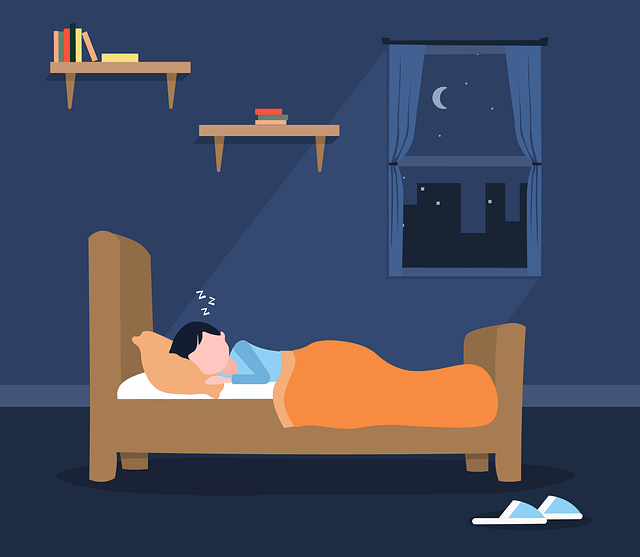
For many of us, the worst moment of every day starts with the buzzing sound of an alarm clock. That noise marks our daily return from the mysterious world that we call sleep. We spend a third of our lives asleep, yet, other than the odd snapshot of a dream here and there, most of us have no idea what happens after we close our eyes. Even though there had been a lot of studies done on this topic but still they are not able to pinpoint and just know over the sheets about sleep.
For a long time, it was just something that happened, everyone assumed that our brains were hitting the reset button and just turning off for a while. But in the past few decades it’s become clear that sleep might be the single most important behavior that humans and other animals experience. It might seem like we don’t do much while we’re sleep, but neuroscience tells a different story. Human sleep patterns are controlled by two competing networks of chemical and electrical signals in the brain. During our waking hours, neurotransmitters released deep within our brain keep our cerebral cortex alert and primed for consciousness. But throughout the day, as our neurons break down ATP for energy, the by-product adenine builds up and activates sleep control neurons near the hypothalamus. A special region in the centre of our brain acts as our master biological clock. Light sensitive cells in our retinas feed signals deep into that brain region, training neurons to sync up with Earth’s 24-hour cycle of day and night. These circadian rhythms are the control switch that tells us when to feel sleepy or awake.
As the world goes dark, this master switch tells our pineal gland to increase levels of the hormone melatonin in the bloodstream, which acts like a chemical lullaby. Feelings of fatigue sets in, body temperature lowers slightly, that heat loss is probably why many of us like to fall asleep with our feet sticking out of the covers.
Together all this neuro-chemistry sends one clear message to our bodies: when it’s dark, it’s time to go to bed.

Unfortunately, in modern times, darkness is increasingly rare. In most of the urban and big cities people live in areas that surpasses standards for light pollution, and we’ve got one person to thank for that; Thomas Alva Edison. Edison thought sleep was lazy, unhealthy, or inefficient, even though he took several naps a day. But despite that hypocrisy his “work more sleep less” view changed our world forever. Illuminating the night became a sign of economic progress, and humankind was no longer at the mercy of nature’s clock. Artificial light can have serious effects on our sleep cycle. When we’re exposed to bright light at night, our brain doesn’t know better than to think the sun is shining. This can be very confusing, preventing the release of melatonin and the onset of sleep. Depression, heart disease, diabetes, and cancer have all been linked to chronic overexposure to artificial light. Until just a couple hundred years ago, it was common for people to fall asleep right after the sun went down, snooze for a while, wake up around midnight, where they would read or study or do other stuff, then go back to sleep until morning.
Many modern experiments have suggested that if people are kept away from artificial light, their bodies will return to this pattern of first and second sleep, yet most of us insist on sleeping the whole night through. What’s worse is our circadian rhythms are so tuned today and night that if we stay up past our usual bedtime, we don’t wake up later, we just tend to sleep less. As a result, we’re massively sleep-deprived. Most adults average just six and a half hours a night. Teenagers average just five hours on school nights, which is half of what they need. To fight this chronic exhaustion, we turn to stimulants like caffeine to help our brains ignore that build-up of adenosine, and then to fight the stimulants. We often wonder why is waking up early so hard. Many people rely on alcohol, which just sedates them, it doesn’t even help with real, restful sleep. This vicious cycle is worth literally billions of dollars a year. It’s kind of messed up.
So what do we sleep for? In short, we’re not sure, but we know it’s essential to life. Animals deprived of sleep for a long enough time will have seizures, and can literally die from exhaustion, plus a whopping 15% of our genes are linked to circadian rhythms. Still, there’s no consensus on exactly why our bodies need sleep. We humans are definitely less active at night. Considering we only burn about 100 fewer calories while sleeping, it’s not a very good energy-saving strategy as well. Our body does a lot of cellular repairs, protein synthesis, and general biological upkeep while we’re in dreamland, but it’s not like we don’t do that stuff when we’re awake too. Another theory says that our bodies use sleep time to flush out all the neuro-garbage, removing waste products that build up in our neurons and brain cells. The decision-making regions of our brain like the prefrontal cortex don’t get any downtime while we’re awake. Even if you’re totally relaxed and you think your mind is clear, your prefrontal cortex is still in action. Just try and think about nothing. Go ahead. See? You’re thinking about not thinking. Sleep seems to be the only time for this region to power down and get a break.
The greatest benefit of sleep may lie in processing information and consolidating memories from throughout the day, letting the brain do all the rewiring that is necessary for thinking better. Studies have shown that sleep deprived people do worse when learning new tasks and they’re less able to process new information, whereas a good night’s rest appears to make us more creative so we can come up with solutions to new problems that we haven’t seen before.
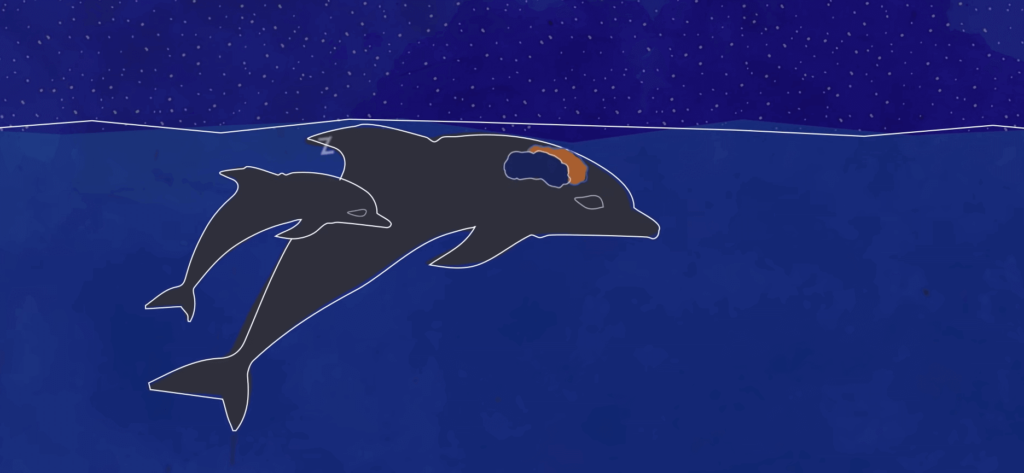
Perhaps the biggest mystery is how sleep evolved in the first place. Snoozing animals are easy targets for predators, so you would think evolution would have come up with something better, but it hasn’t. There’s no way to get around the need for sleep. Some animals have come up with interesting ways to deal with the inconvenience of sleeping, though. Dolphins obviously can’t nod off without drowning, so they only sleep with one half of their brain at a time, swimming along using the half of their body that’s still awake. Before baby dolphins learn that trick, they take adorable little dolphin naps while their parents keep them afloat. Sleep or similar patterns of rest are seen so universally throughout the animal kingdom that they must have an ancient origin and one clue comes from a tiny ocean-dwelling worm. Every night, these worms swarm near the surface of the ocean to feed, and every day they sink down deep to avoid light and predators. These worms have special daylight-sensing cells on their back, just like the ones in our eyes. When it’s dark, those cells trigger the production of melatonin, just like in our brains. As the melatonin builds up, tiny hairs on their bodies stop beating and the worms begin to sink, just in time for the sun to come up. As the melatonin disappears throughout the day, the hairs begin beating again and they swim back up to the surface to do it all over again. Sleep might have evolved 700 million years ago, the last time we shared a common ancestor with that tiny worm. It’s important, so maybe we should all make a little more time for it.
If you are the lucky one’s who get a good night sleep, but still find it hard getting up first thing in the morning we would suggest you to go through our interesting article on why is it so hard to wake up early.



Trackbacks/Pingbacks